Language & Communication
BSL
What is Language & Communication hub?
The Language and Communication Hub, led by Dr Rob Wilks (UWE Bristol) and Anouschka Foltz (University of Graz), is dedicated to increasing the visibility of British Sign Language (BSL) in Wales. BSL is not just “signed English”: it is a distinct language with its own grammar, vocabulary, and dialects. But in Wales, BSL still lacks the recognition and visibility it deserves. By strengthening the presence of BSL and expanding access to information, we aim to ensure deaf people in Wales can access vital health knowledge in their own language.
Making BSL more visible in Wales
We’re raising awareness that BSL is a language in its own right, with its own grammar, structure, and culture. Our goal is to make BSL more visible across public life in Wales, from services to everyday spaces.
Preserving BSL heritage
We’re recording older signs used by deaf people in Wales before they fade from use. These heritage signs are an important part of our cultural and linguistic history.
Celebrating BSL in Wales
BSL looks and feels different across Wales. We’re documenting regional dialects to show the richness of the language and highlight the diverse ways BSL is used in Welsh deaf communities.
Improving access to health information
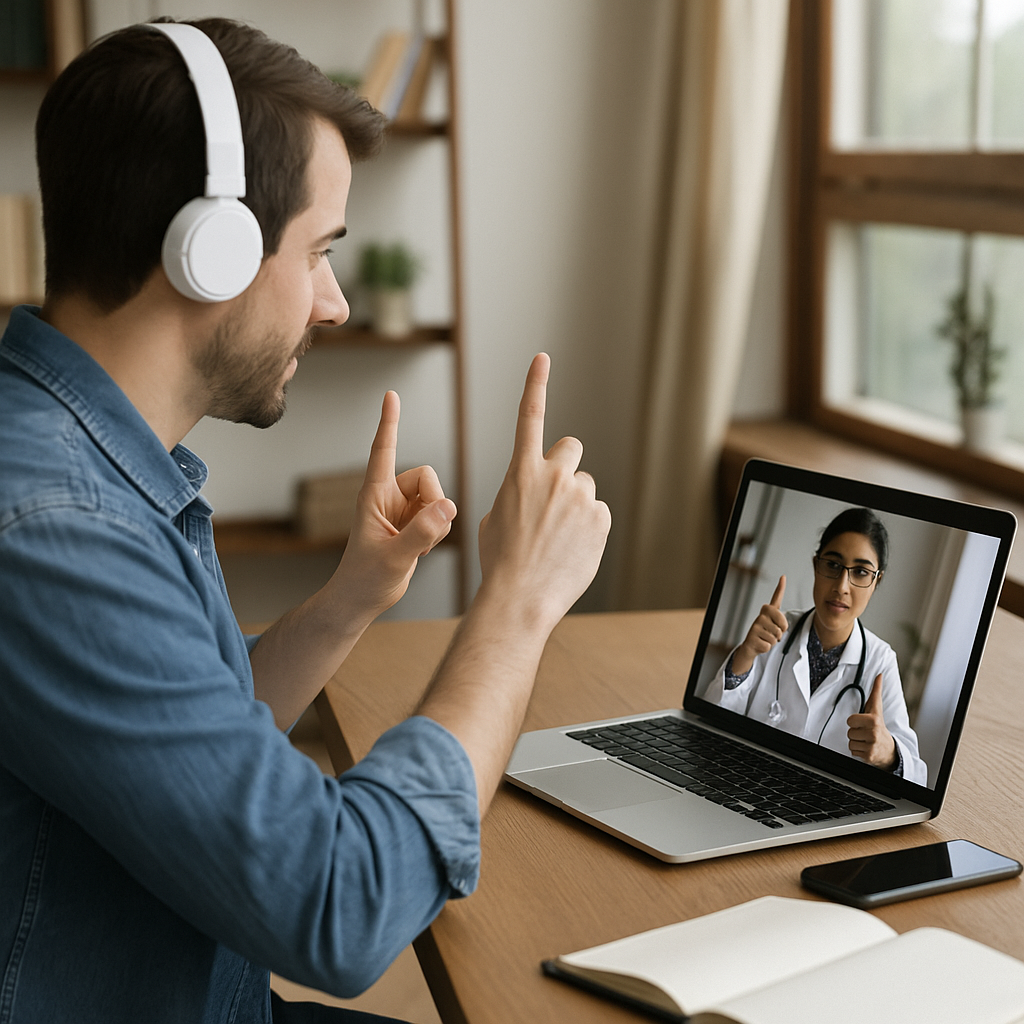
We’re creating medical resources in BSL to help deaf people understand health information in their first language, supporting better access, confidence, and wellbeing.
What are we doing?
Our Dialect Survey
Identifying how many regional dialects in BSL there are in Wales
Welsh BSL heritage
Recording BSL signs used by Welsh deaf individuals in their twilight years
Medical Glossary
Creating a glossary of BSL signs that can be used by deaf individuals, interpreters and translators in health settings.
Video Booths
Look for our video booths at an event near you which we are using to capture BSL signs and stories
BSL is still not widely recognised in Wales, and information in BSL – especially health-related information – is hard to find. We want to change that.

Facts & Figures
-
There are between 4,000 to 69,000 BSL signers in Wales.
-
Many people in Wales don’t realise BSL is a language in its own right.
-
Many health care professionals and members of the general public see deaf individuals from the perspective of disability.
-
This often has negative consequences in terms of their quality of education, health and social services and quality of life.
-
There is little research on Welsh BSL dialects, meaning regional differences are often overlooked.
-
Health and medical resources in BSL are limited, leaving many deaf people struggling to access essential information about their health.
Are you a Welsh BSL signer? Want to get involved?
We are interested in identifying how many regional BSL variations there are across Wales, and you can help by taking part in our dialect survey!
FAQs
This hub is important because BSL currently does not have much visibility in Wales. We want to make sure that people in Wales know and value the language. We also want to make sure that deaf people in Wales know where they can find medical information and resources in BSL.
We’re running a BSL dialect survey, recording heritage signs, and creating medical resources in BSL, all designed to strengthen BSL’s presence in Wales.
Sign Language is still not widely recognised in Wales, and access to health information in BSL is limited. This affects deaf people’s rights, wellbeing, and visibility.
If you’re a BSL signer in Wales, take part in our dialect survey or visit a video booth. Share your signs, stories, and support to help build a richer picture of BSL in Wales.